Quick answer. Under World Aquatics rules, a competition suit for artistic (synchronized) swimming must be non-transparent and appropriate for a sporting event, without the effect of excessive nudity — but it may reflect the character or theme of the music. Theatrical make-up isn't allowed; natural make-up is. Only small stud earrings are permitted, and anything dangling from headpieces or suits must come off. Nose clips are allowed; goggles aren't in routines unless medically required. In the figures session the suit must be black, with a white cap. A swimmer whose suit doesn't comply isn't allowed to compete until it does.
Artistic Swimming Suits: History, World Aquatics Rules, and Why the Theme Comes First
Artistic swimmers train breath-holding as deliberately as other athletes train strength or speed.
Up to half of a routine happens underwater — moving, lifting, throwing.
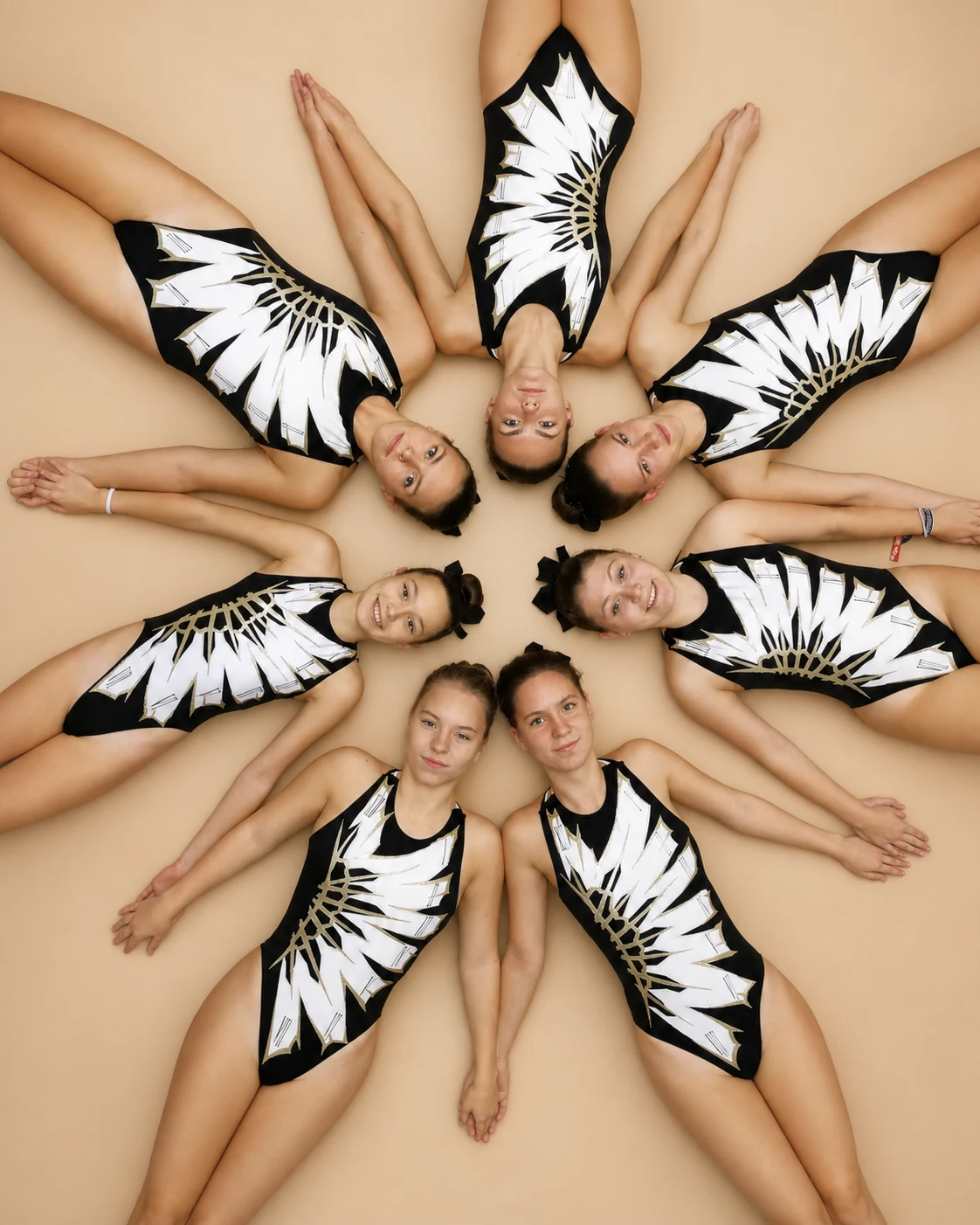
The night before a meet, the locker room smells like unflavored gelatin. Someone is warming it up, someone is brushing it into a perfectly flat bun, and the competition suits hang on hooks in a row — eight of them, identical down to the last crystal.
That suit wasn't picked from a catalog. Months earlier, the coach chose the music and named the routine. The suit was designed to tell that story — and to survive a few hundred dives into chlorinated water without losing a single stone.
Artistic Swimming: What It Is and Why It Changed Its Name
Artistic swimming is the Olympic sport where athletes perform choreographed routines to music in the water: lifts, throws, acrobatic figures, precise transitions — all with a smile while most of the body is underwater. It's also one of the most physically demanding sports there is. Swimmers never touch the bottom of the pool; they hold themselves up with a constant rotary kick called the eggbeater.
About the name. On July 22, 2017, in Budapest, the FINA Congress (FINA is now World Aquatics) voted to rename synchronized swimming as artistic swimming. The idea came from the International Olympic Committee, which wanted to give the sport more visibility. Plenty of clubs, parents and fans still say "synchro" — in this article, both names mean the same sport.
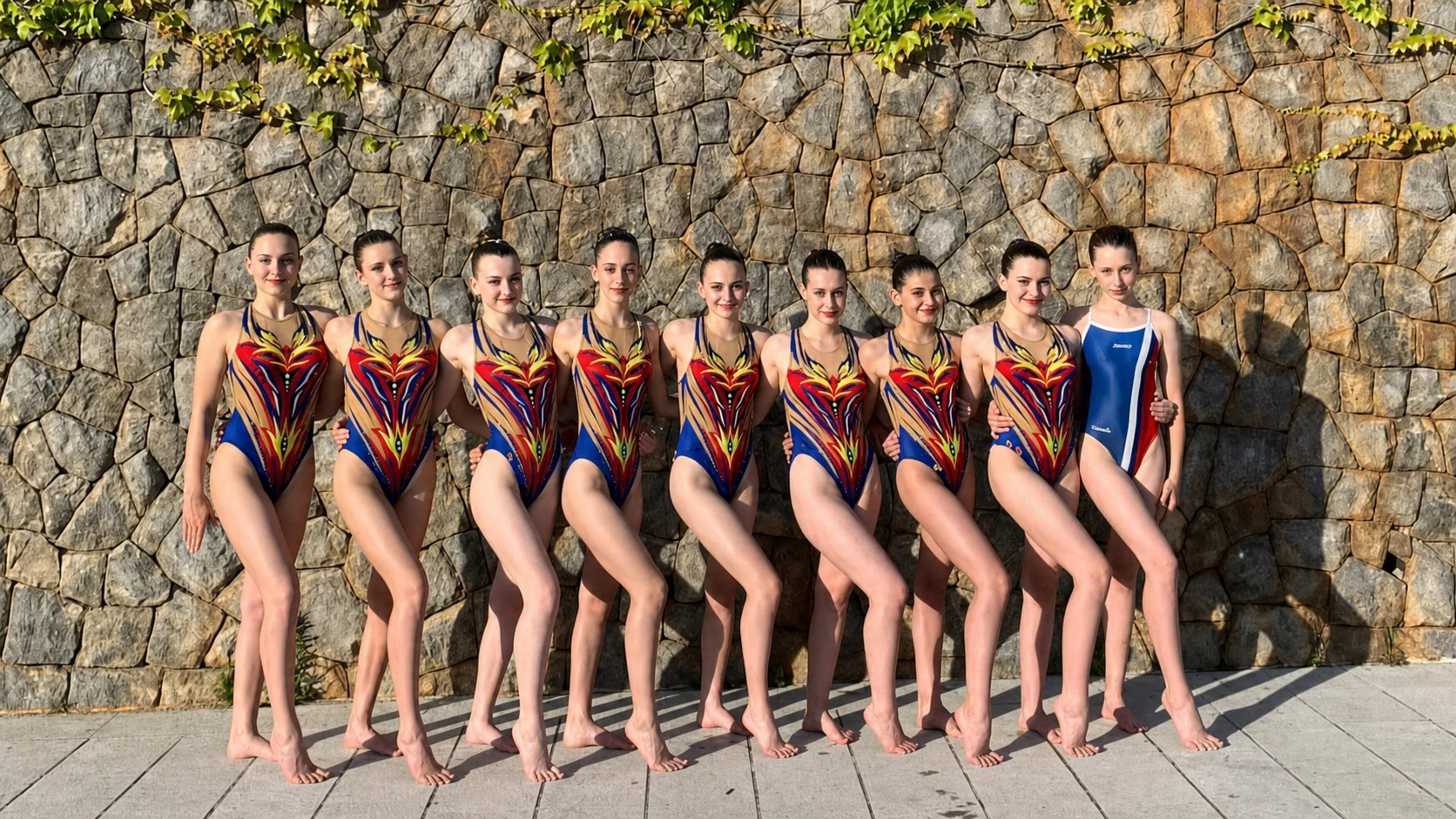
Events include solo, duet, mixed duet and team (eight athletes). Each has a technical routine with required elements and a free routine, where the coach and swimmers choose the theme, the choreography — and the suit. The free routine is where the costume matters most.
Two judging panels score each routine. The elements panel scores the difficulty and execution of the elements. The artistic impression panel scores choreography, musicality and performance. The suit lives in the world of artistic impression, but it also has its own technical rules — with real consequences if they're broken.
And the men. Men have competed internationally since the mixed duet joined the 2015 World Championships, where American Bill May became the first male world champion. For Paris 2024, men became eligible for the Olympics for the first time — up to two per team of eight. In the end, though, no men were selected: all 96 athletes in Paris were women.
How the Artistic Swimming Suit Evolved: From Wool to Theater
1907: a glass tank in New York. Australian swimmer and performer Annette Kellerman staged a "water ballet" in a glass tank at the New York Hippodrome, and she's often credited as one of the sport's founders. Kellerman was also one of the first women to swim in a one-piece suit instead of the layered bathing costumes of the day — and other women followed her lead.
1920s–1930s: water ballet takes over North America. In the 1920s, swimmers in Canada and the U.S. began turning lifesaving skills and graceful swimming into formation displays. In 1923, Katharine Curtis started a water ballet club at the University of Chicago, combining swimming tricks with music. The suits were plain knits with swim caps and, at most, a club emblem.
1940s–1950s: Hollywood turns it into a show. Esther Williams starred in a string of MGM musicals — *Bathing Beauty* (1944), *Neptune's Daughter* (1949), *Million Dollar Mermaid* (1952), in which she played Annette Kellerman herself. Her films staged water ballet as a full production, with choreography, music and theatrical costumes, and they shaped the look audiences still expect from the sport.
1984: Olympic status. Synchronized swimming joined the Olympic program at the Los Angeles Games with solo and duet. In Atlanta in 1996, the team event replaced both; the duet came back in 2000. By then the suit was clearly part of the artistic statement — designed for the routine's theme, not just worn as a uniform.
1990s–2000s: the theme dictates the suit. The principle that still holds today took shape: first the theme and the routine name, then the look and the suit. Crystals, appliqués and bold stage make-up arrived — though theatrical make-up has since been ruled out.
Today: a design piece with waterproof decoration. A modern competition suit is made by specialist makers. It has to survive repeated dives, keep its shape in the water, hold its color and keep every decoration on. Crystals go on with waterproof adhesive — anything less, and the pool keeps them.
And about the gelatin. An artistic swimmer's hair is its own discipline. It's pulled into a tight bun and coated with warm unflavored gelatin — Knox is the classic — which sets hard and holds through dive after dive better than any hairspray. Hair ornaments are allowed too, with one condition in the rules (more on that below).
World Aquatics Rules for Artistic Swimming Suits
The requirements are in the artistic swimming section of the World Aquatics Competition Regulations, together with the general swimwear rules. The current edition dates from June 2025. Official rules page: worldaquatics.com; direct link to the Competition Regulations (PDF, June 2025).
Artistic Swimming Suit Rules at a Glance
| Element | Allowed? |
|---|---|
| Suit that reflects the music or theme of the routine | Yes |
| Theatrical make-up that turns the swimmer into a character | No |
| Nose clip | Yes |
| Small stud earrings | Yes |
| Dangling jewelry, dangling items on headpieces or suits | No |
| Goggles in routines | No (unless medically required) |
| Goggles and nose clips in the figures session | Yes |
The Routine Suit
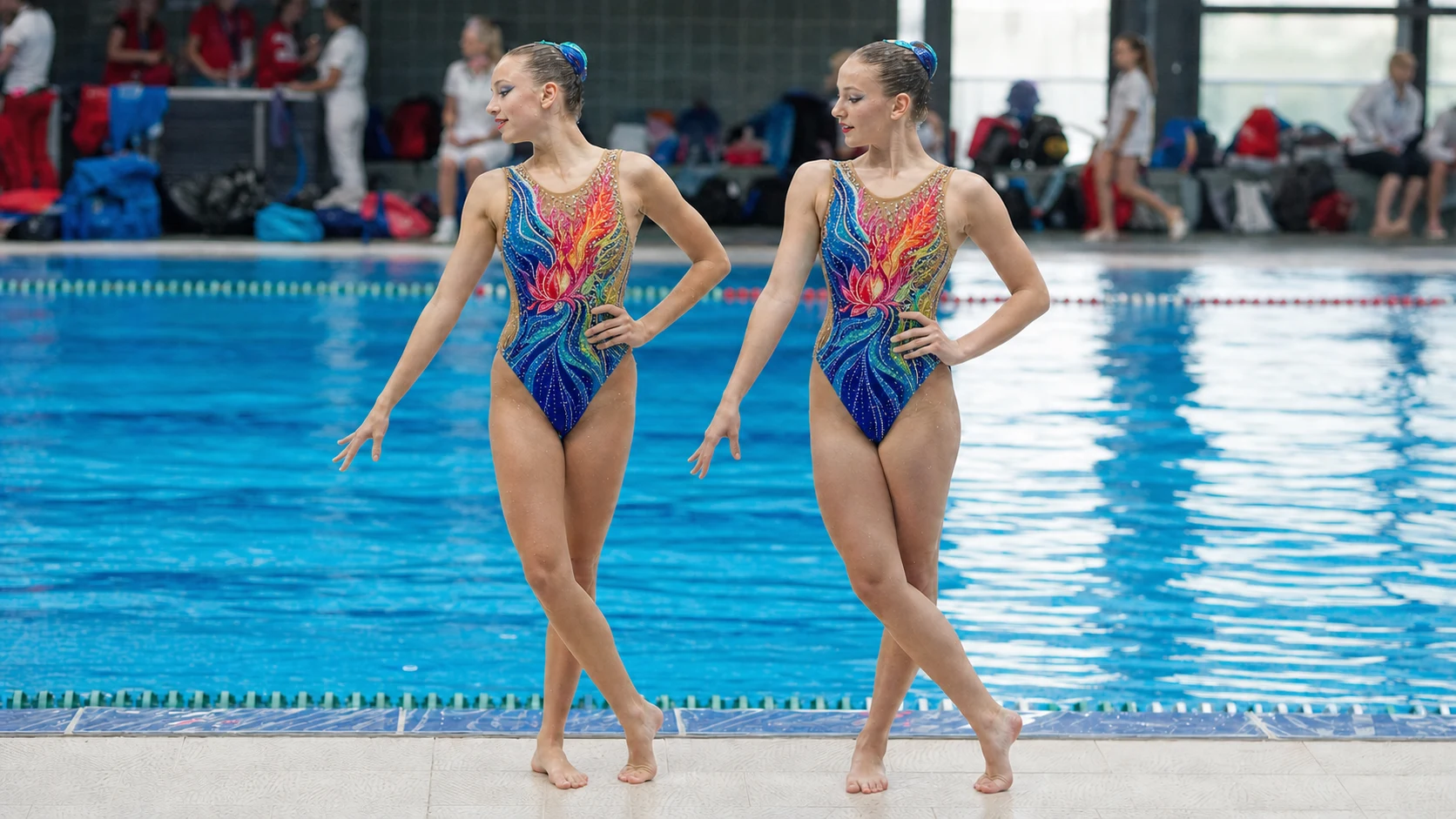
A routine suit must be non-transparent, appropriate for a sporting event and must not give the effect of excessive nudity. At the same time, it may reflect the character or theme of the music — the rules say so directly. That's why suits differ so much from team to team: one swims in silver to Mozart, another in deep red to flamenco.
If the referee decides a suit doesn't comply, the swimmer isn't allowed to compete until it does.
The Figures Session
Figures are a separate part of the competition with their own dress code — and it's strict: a black suit and a white cap. No themed costumes, no decoration that creates a character. Just the body and the figure. Goggles and nose clips are allowed here.
Make-Up
Theatrical make-up is not allowed in routines. Natural make-up that reflects the swimmer's personality or the theme of the routine is fine. The line between the two is a judgment call. In practice, bold stage make-up that suits the look is normal; feathers, a fake nose or a face painted to look like an animal are not.
Jewelry and Hair Ornaments
For safety, only small stud earrings are allowed. Anything dangling — jewelry, or loose pieces on a headpiece or the suit itself — has to come off before the event starts. In lifts and fast transitions, a dangling piece can catch or hurt another swimmer.
Headpieces and hair ornaments are allowed as long as nothing on them dangles.
Nose Clips
A nose clip — a small wire clip coated in plastic or rubber — is allowed in routines. It keeps water out of the sinuses during long stretches underwater. Many teams decorate their clips to match the suit; that's not a rule, just a long-standing habit.
Goggles
Goggles are not allowed in routines (solo, duet, team) unless there's a medical reason. In the figures session, they're allowed.
Fun fact. In *Million Dollar Mermaid* (1952), Esther Williams played Annette Kellerman — the woman who staged water ballet in a glass tank in 1907. The film's title became Williams's own nickname, and the two women most responsible for how the sport looks met on screen.
What an Artistic Swimming Suit Costs — and Why the Theme Comes First
An artistic swimming suit is made differently from almost any other sports costume. It goes from theme to suit: first the coach and choreographer choose the music and the concept, and only then is the look — and the suit — designed around it. No theme, no look. No look, no suit.
Fabric. Pool suits need chlorine-resistant fabric. Regular spandex-heavy knits break down and lose their stretch with constant exposure to chlorine, so makers use chlorine-resistant blends — polyester and PBT-based fabrics are the usual choice for suits that train and compete in the pool every week.
Decoration is its own story. Rhinestones, crystals, sequins and appliqués have to be attached with waterproof adhesive or stitched on securely, or they'll end up on the bottom of the pool. That's the real difference from "dry" sports: the way decoration is attached, and the materials, both change.
Price. The range is wide and depends mostly on how the suit is made. Based on what custom suit makers list online, a made-to-order suit typically runs about $75–200, suits with rhinestone work sit around $130–150, and handmade suits with dense crystal and mirror work can reach $300 and more. A team order isn't much cheaper per suit: fabric and decoration are bought for one specific look, and each suit is still cut to each swimmer's measurements.
Team format. In a team routine, all eight swimmers (plus alternates) wear identical suits — same design, same decoration colors. For a maker, that's a production challenge: eight matching pieces from one fabric with one decoration layout. "Close enough" doesn't work — the judges see all eight at once.
Sublimation Printing: When the Print Matters More Than the Crystals
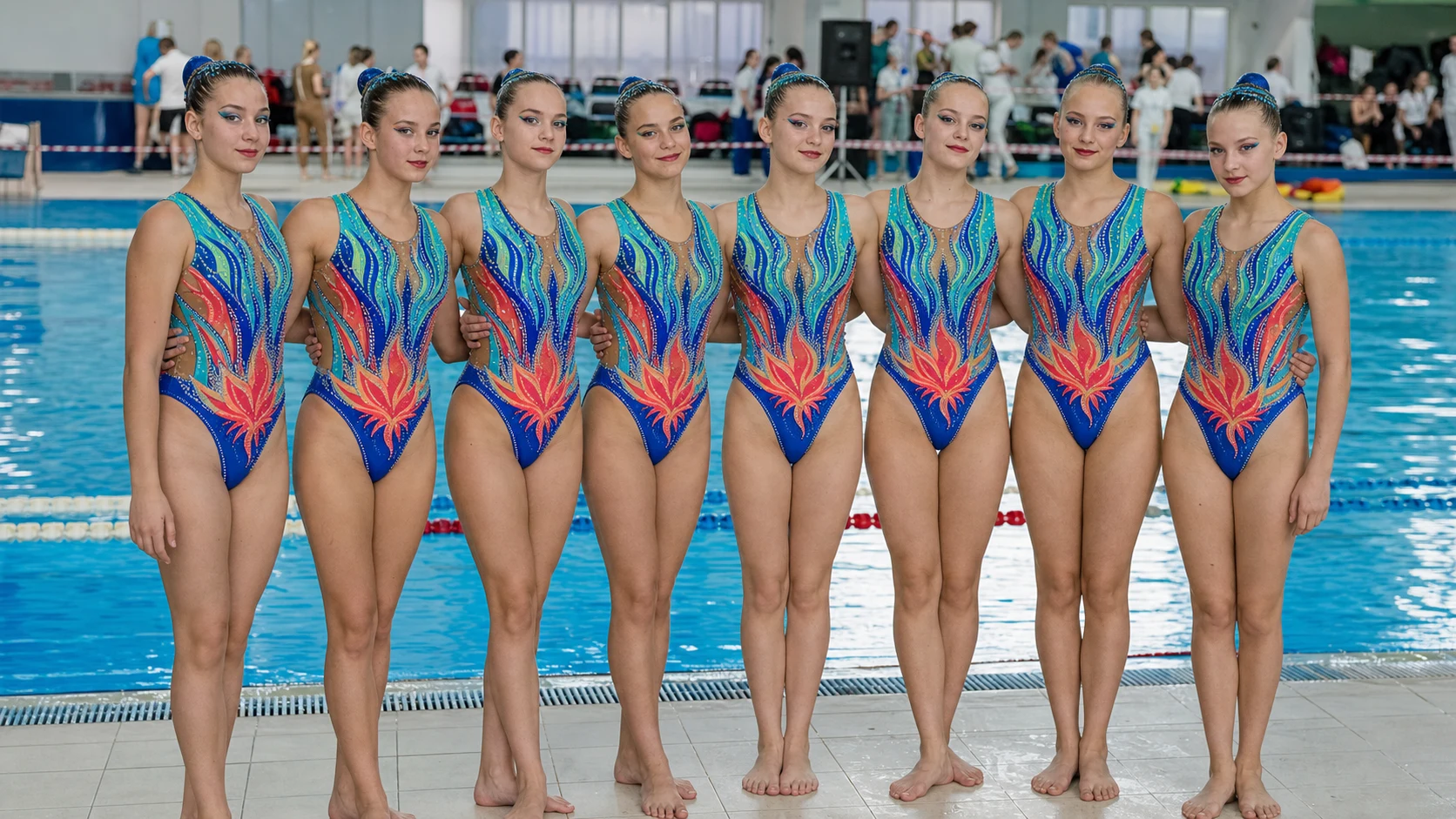
Sublimation printing is everywhere in artistic swimming. The dye bonds with polyester fibers and becomes part of the fabric, so the print doesn't fade or peel with regular chlorine exposure. Crystals still go on top — sublimation and rhinestones aren't either-or.
The big advantage over appliqué is design freedom: gradients, photographic images, prints that run seam to seam. The routine's theme can literally be read on the suit. It also costs far less than hand appliqué, and one print file produces eight identical team suits with no differences between them. If you're weighing which sports to sew for, artistic swimming is one of the competition costume niches where team orders are the norm.
A Pattern Made to Your Measurements — Where the Right Fit Starts
An artistic swimming suit works in the water, so a bad fit shows twice: the fabric shifts and stretches, and the judges see discomfort instead of the look. The suit has to fit close enough not to drag in the water without restricting splits, lifts and vertical positions with the legs overhead. It's the same fit problem as in rhythmic gymnastics leotards — with water added.
With AROA, measurements turn into a ready-to-use digital pattern in a few minutes. Print it straight away, or refine it in a graphics program before cutting — for example, design the back of the suit from a single photo.
Build your pattern in AROA and get a ready-made base to work from.
Create a pattern from your measurements →
Rhythmic Gymnastics Leotards: History, FIG 2025–2028 Rules, and How Much They Really Cost

Artistic Gymnastics Leotards: History, FIG 2025–2028 Rules, and What They Really Cost
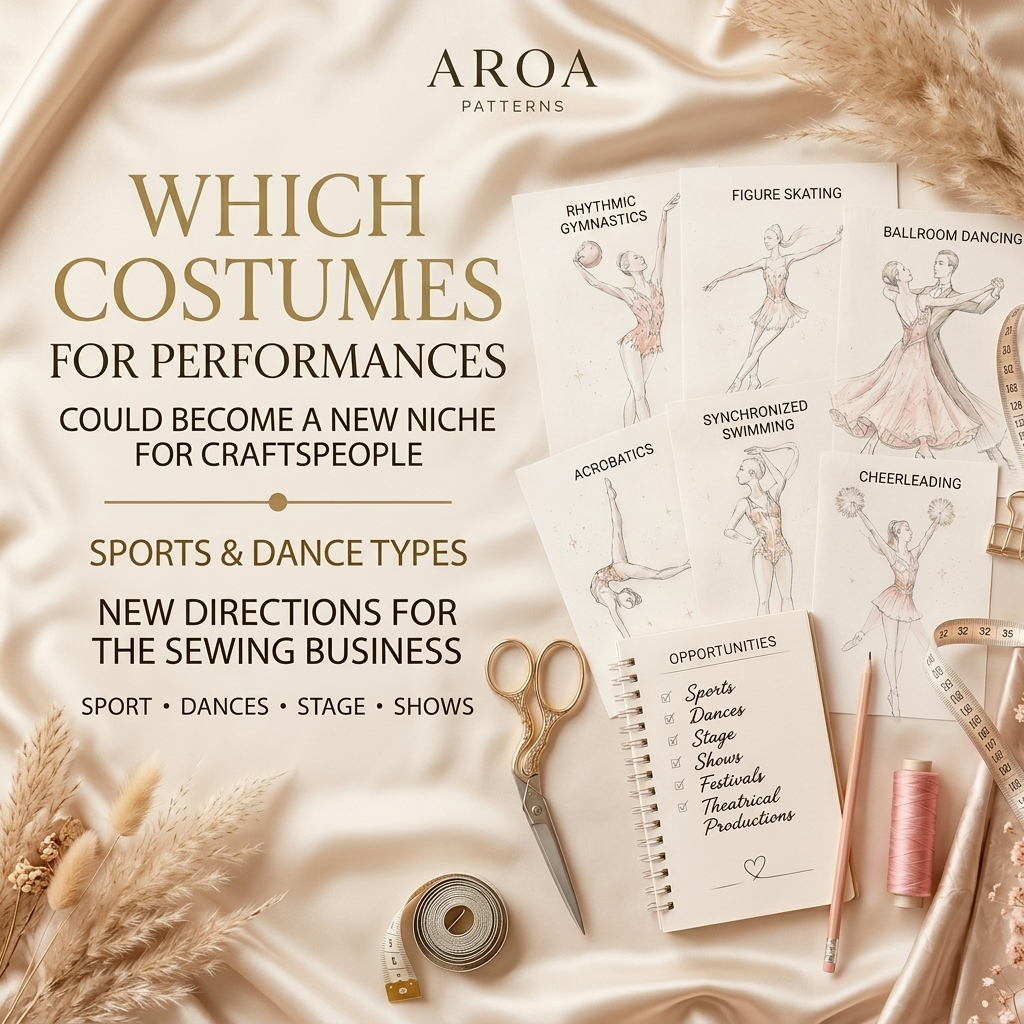
Competition Costume Niches

How to Create a Leotard Back Design from a Photo

Your First Pattern — Free
Rhythmic Gymnastics Leotards: History, FIG 2025–2028 Rules, and How Much They Really Cost
Artistic Gymnastics Leotards: History, FIG 2025–2028 Rules, and What They Really Cost
Competition Costume Niches
How to Create a Leotard Back Design from a Photo