How to Sew a Leotard for Competition: A Beginner's Guide
It usually doesn't start with a business plan. It starts at the gym, the rink, or the studio — watching a dozen kids in leotards and realizing: someone made every single one of them.
Someone took the measurements. Someone built the pattern. Someone picked the fabric, the mesh, the crystals, and pieced the whole look together. And more often than not, that someone isn't a factory — it's a parent who decided to figure it out.
A huge number of makers in this space start through their own kid's sport. Not because they planned to open a studio. Because one day they wanted to understand how performance leotards are actually made — and started with one simple piece.
This guide covers what it really takes to sew a leotard for gymnastics, dance, or skating: the skills, the fabric, where to get a pattern, how long your first one takes, and how digital patterns remove the hardest part of starting.
Why a leotard is often a parent's first sewing project
Parents of athletes usually come into sewing already living inside the sport. They know the training schedule, what coaches expect, and why fit matters just as much as how the leotard looks.
Rhythmic gymnastics, figure skating, competitive dance, acro, and twirling all share the same problem: kids need garments built for their exact body, and off-the-rack rarely fits right. One kid outgrows last season's leotard. Another needs a new program. A third can't find a ready-made style that works for their routine.
Sewing for performance is different from sewing everyday clothes. It's not just about a clean seam — it's about understanding movement: splits, backbends, jumps, arm and torso lines. A leotard has to look sharp and disappear on the body at the same time.
What skills do you actually need
You need three things to start: basic comfort with stretch fabric, accurate measuring, and an understanding of how a garment sits on a moving body. You don't need a design degree or years in a studio to begin.
You'll build comfort with biflex, lycra, power mesh, edge finishing, and clean seams as you go — but your first leotard doesn't need to be complicated. Start with a simple training leotard and walk the full process once: measure, draft, cut, sew, fit-check.
The skill that matters most early on isn't rhinestone placement. It's getting a clean base. A great-looking leotard starts with a pattern that fits the specific kid in front of you — not with sparkle.
Three mistakes almost every beginner makes
Mistake #1: Expecting your first piece to look professional.
This is where most people quit. You compare your first leotard to someone else's tenth, and the comparison feels brutal. Here's the truth: every experienced maker has a drawer of uneven seams and pieces they'd never show a client. Your first leotard isn't there to be perfect — it's there to teach you the whole process, start to finish.
Mistake #2: Cutting corners on tools.
People research fabric for hours, then grab whatever scissors and needles are in the drawer. Regular scissors chew through stretch fabric instead of cutting it cleanly, so the edge frays. A standard needle punches holes in knit fabric — biflex and lycra need a ballpoint needle that slides between the fibers instead of tearing them. Thread that snaps under tension undoes the whole seam. A one-time investment in proper shears, ballpoint needles, and quality thread costs far less than redoing a finished piece.
Mistake #3: Rushing past the people who've already done this.
The most expensive mistake at the start is speed. It's tempting to skip the fundamentals and go straight for a polished result. When something goes wrong, most beginners just start over — without figuring out what actually broke and why. There's a large community of makers who've already made every one of these mistakes, and most are happy to share what they learned. Starting small, breaking down each step, and asking questions isn't a weakness — it's the fastest route to confidence.
Can you sew leotards at home?
Yes. You don't need a studio, a lease, or industrial equipment to make your first leotard.
Most makers start exactly here: sewing one leotard for their own kid, testing the fit at practice, fixing what didn't work, and only then taking their first order. It's the lowest-risk way to find out whether you actually enjoy the process.
First clients in this world usually come through trust, not marketing. A parent sees the finished leotard on another kid at the gym, asks who made it, and wants one built to their own kid's measurements.
What materials do you need for a leotard
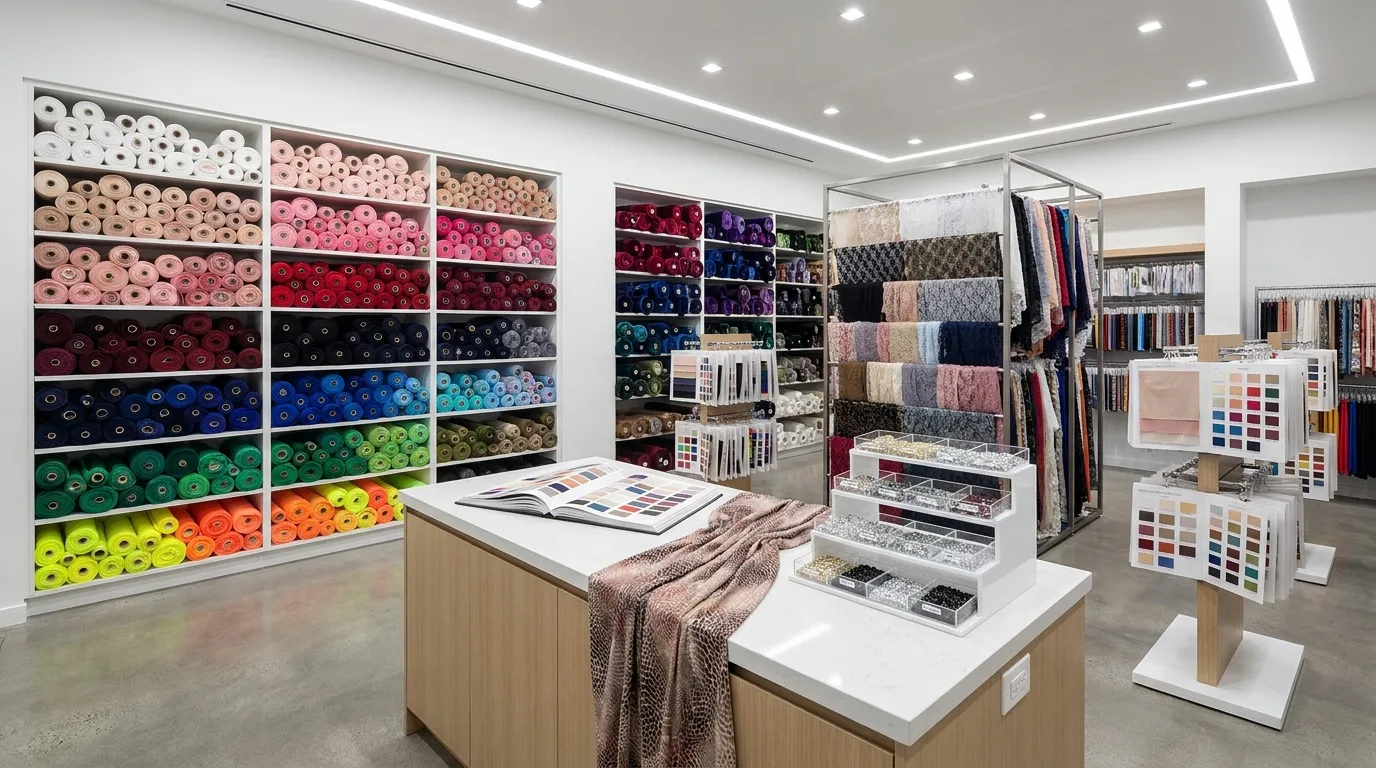
Most competition leotards are built from biflex or four-way stretch lycra, with power mesh, velvet, lace, and metallic fabrics used for accents. Rhinestones, appliqués, and hand-painted details are added on top for the performance look.
| Material | Typical use | Notes |
|---|---|---|
| Biflex / Lycra | Main body of the leotard | Strong four-way stretch, the standard base fabric |
| Power mesh | Sleeves, inserts, upper panels | Lightweight look, needs careful finishing |
| Velvet | Accents and design details | Adds depth of color and texture |
| Lace | Decorative trim | Used for detailing, not structure |
| Rhinestones & appliqués | Competition pieces | Build the performance look, add significant time |
Good fabric can't fix a bad pattern. If the base doesn't fit correctly, even premium material will pull, twist, or restrict movement.
How to take measurements for a leotard
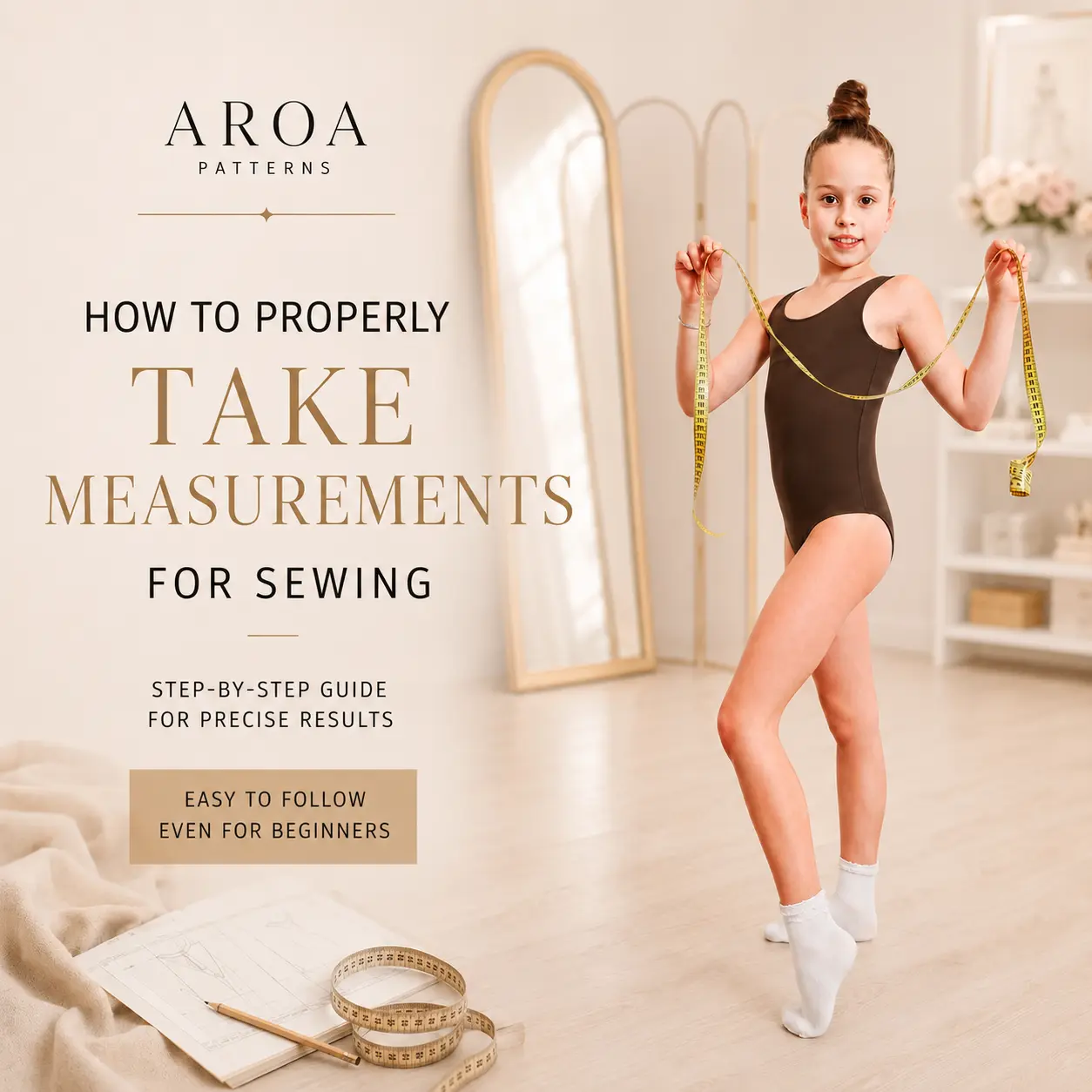
Most leotard patterns rely on 9–15 core measurements, depending on the style. Height, bust, waist, hip, and torso length matter most, along with a few supporting measurements for fit.
Measurements for performance wear are taken close to the body, with no growing room added. Even a half-inch off can throw off the fit — the leotard will pull, bunch, or shift during movement.
If this is your first time measuring, use a step-by-step guide with photos and a recording template so you don't miss a point.
Open the measurement guide →Where to get a leotard pattern
You can hand-draft a pattern, buy a ready-made one, or generate a custom pattern from a digital service. Each option fits a different stage and skill level.
Ready-made patterns feel like the easy choice, but they're built for a standard size. In performance wear, that's a real problem — kids the same age can vary wildly in height, torso length, shoulder width, and hip proportion.
A pattern built from individual measurements lets you start with confidence, because the base is already shaped for that specific body. For a competition leotard, that's not a nice-to-have — the piece has to hold up in motion, not just close in the back.
How long does your first leotard take
A first training leotard typically takes 3–10 hours, depending on experience, the design, the fabric, pattern quality, and how many fit corrections come up after the first try-on.
A full competition leotard takes considerably longer. With mesh, appliqués, complex lines, hand-painting, or heavy rhinestone work, it can stretch to a week or more.
Your first piece isn't supposed to be fast. Its job is to teach you to read fit, understand fabric behavior, and catch mistakes — before you're sewing for someone else's kid.
How much does it cost to sew a leotard
Cost depends on design complexity, fabric, decoration, your location, turnaround time, and your skill level. A simple training leotard and a rhinestone-covered competition piece are not the same project in time or price.
As a rough benchmark: a basic training leotard runs 3–10 hours of work, while a competition piece can run 15–40+ hours. On top of that: fabric, mesh, elastic, thread, rhinestones, appliqués, fittings, and revisions.
Track your time, not just your materials. An accurate pattern and precise measurements mean fewer re-dos — which makes every order faster and more profitable.
Can you actually make money sewing leotards?
Yes — and it's a real path many makers have built into solid side income or a full small business. How much you earn depends on order volume, project complexity, and how much time goes into patterns, fittings, decoration, and fixes.
For example, 2–4 simple orders a month is often enough to cover materials, equipment, and ongoing learning. Real income shows up once you have repeat clients, a streamlined process, and less time lost to guesswork.
The most common pricing mistake: calculating profit as "order price minus fabric." In reality, you need to count every hour — client messages, measurements, drafting, cutting, fittings, fixes, decoration, and packaging.
What actually stops most beginners
It's rarely the sewing machine. Most beginners stall out on fear: ruining the fabric, measuring wrong, drafting a pattern that doesn't fit, or not being able to fix the fit once it's sewn.
That fear makes sense. A competition leotard has to look sharp, fit precisely, and hold up through a routine — especially for a kid who's about to perform in it.
The calmest way in isn't a complex order. It's a simple design and a pattern you trust. Once the base fits, you can put your attention on fabric, finishing, fitting, and clean construction.
Want to know how I got into sewing leotards and why I built AROA? I wrote about it separately — no instructions, no tables, just the story.
Read my story →How to start sewing your first leotard
Start with a simple design, accurate measurements, and a pattern built for your kid's specific body. That combination lets you move through the whole process without pressure, and shows you exactly where you'll need to pay closer attention.
Choose a simple design
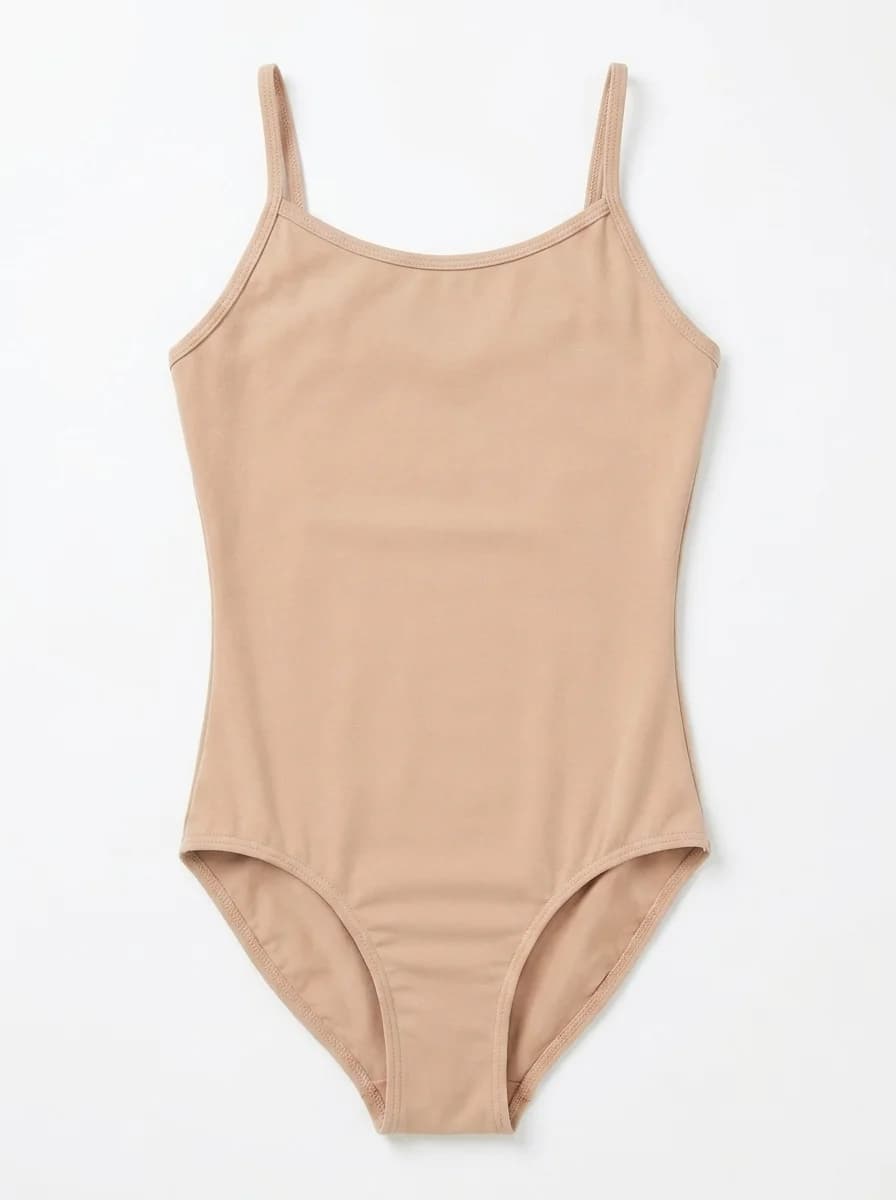
For your first project, pick a basic training leotard without mesh, asymmetry, or heavy decoration.
Take measurements
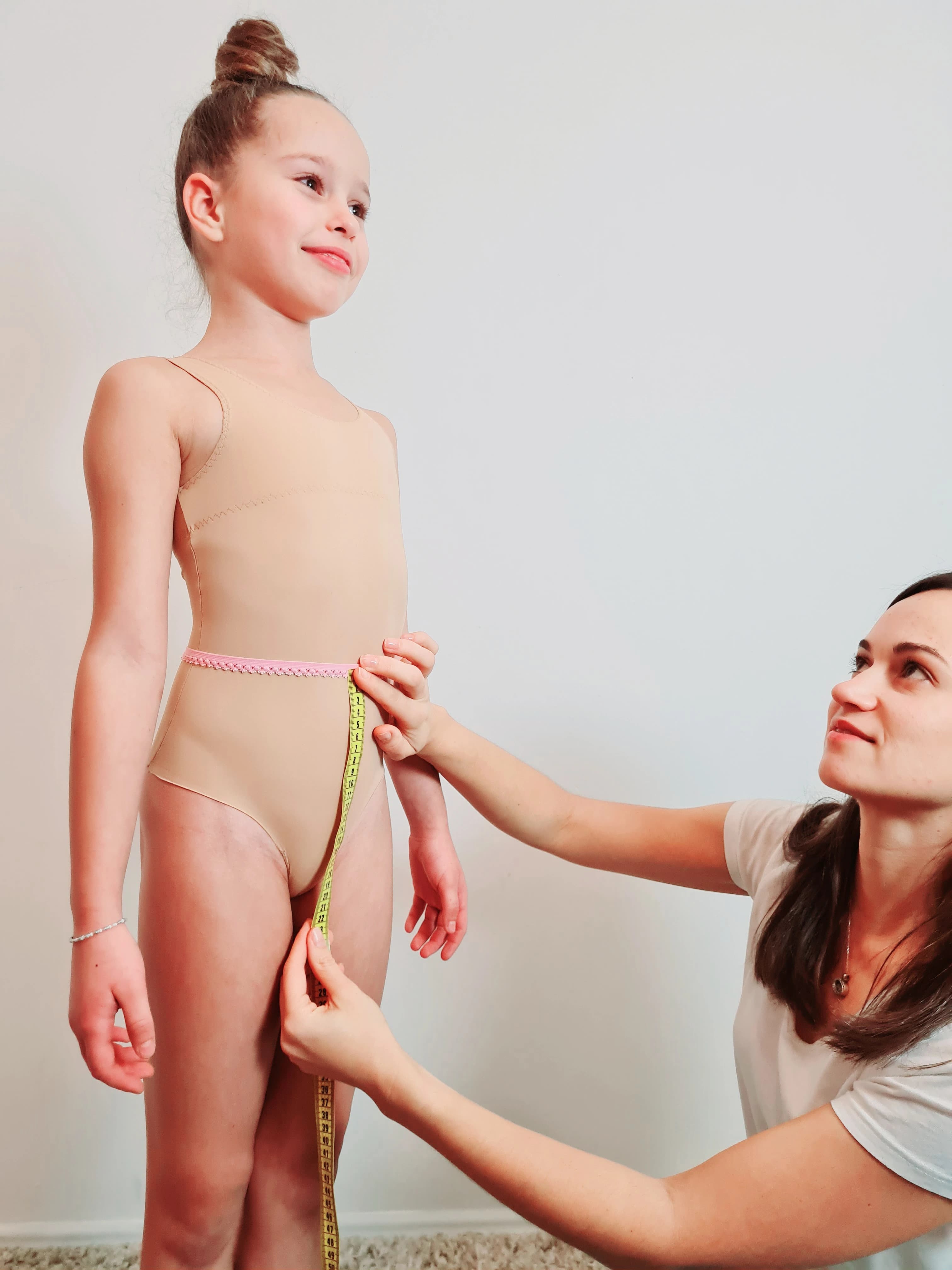
Measure carefully and use a guide and template so you don't miss anything important.
Prepare your pattern
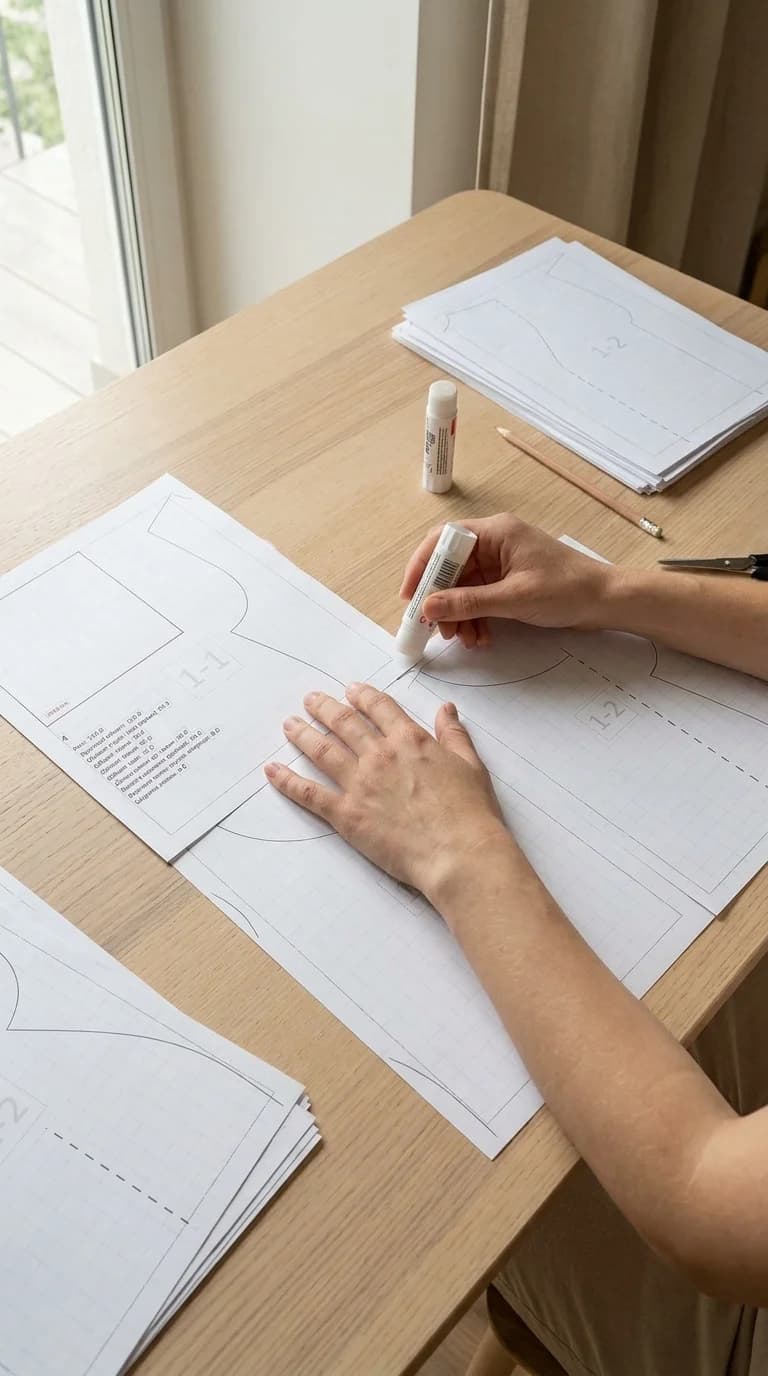
Draft by hand, use a ready-made base, or generate a custom digital pattern from your own measurements.
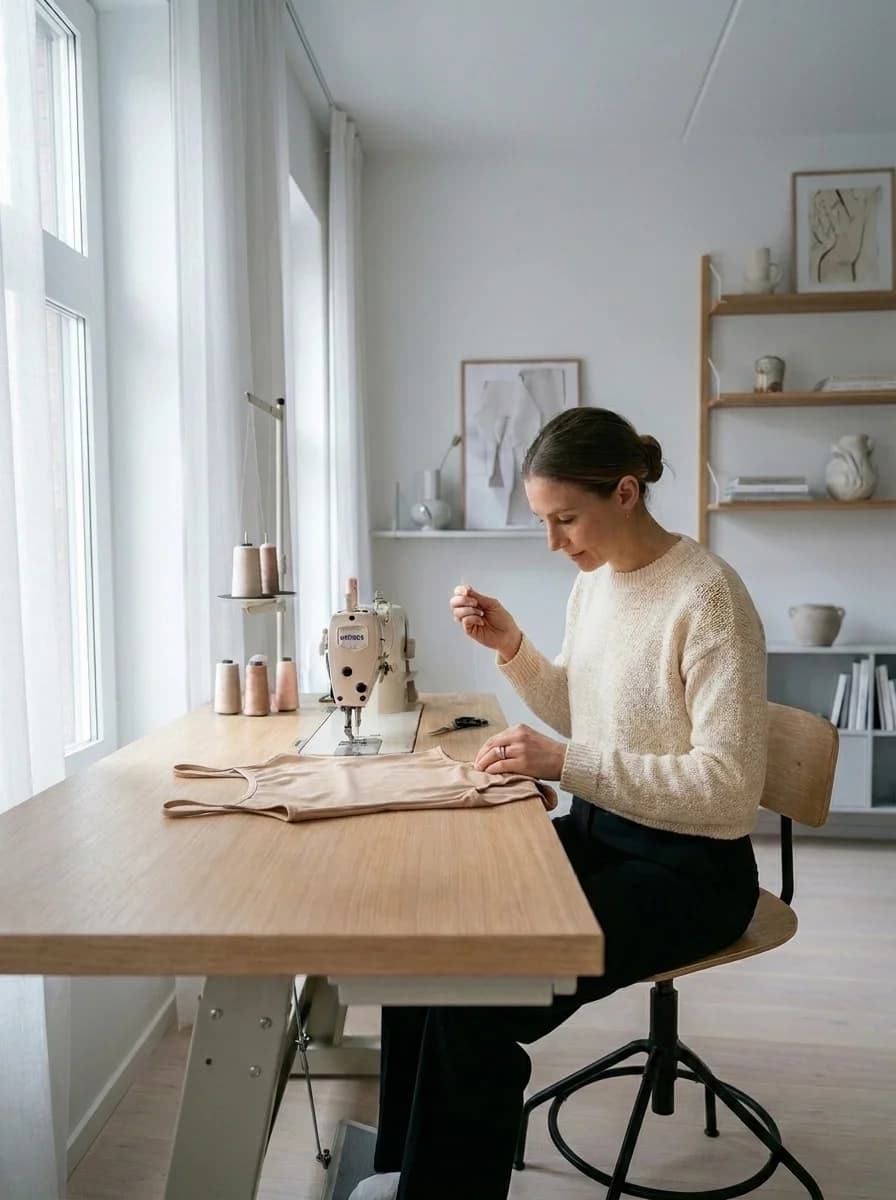
Sew a test piece
Treat your first leotard as a learning piece. It'll show you how the fabric moves and where the fit needs adjusting.
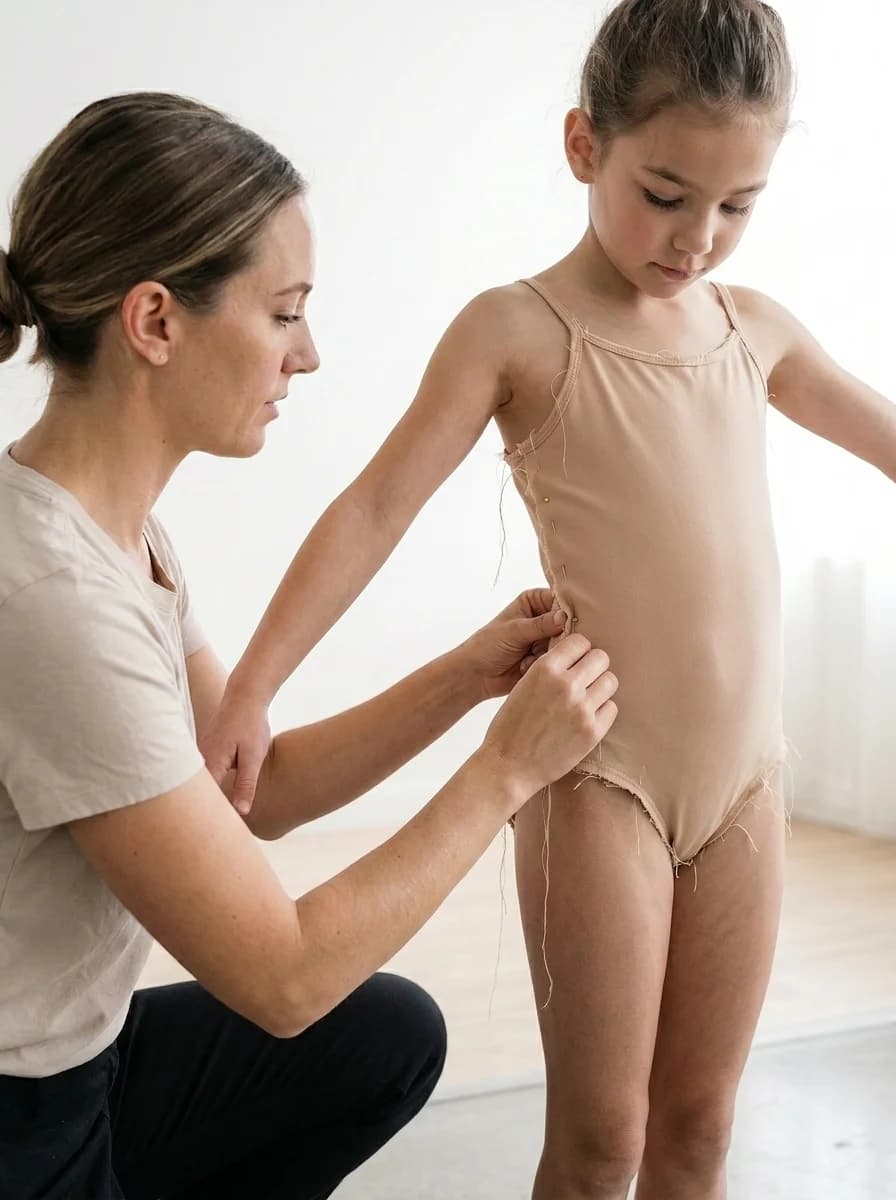
Check the fit
Have the kid move in it — arms up, backbend, a few familiar positions. That's the fastest way to spot where it pulls, bunches, or sits too loose.
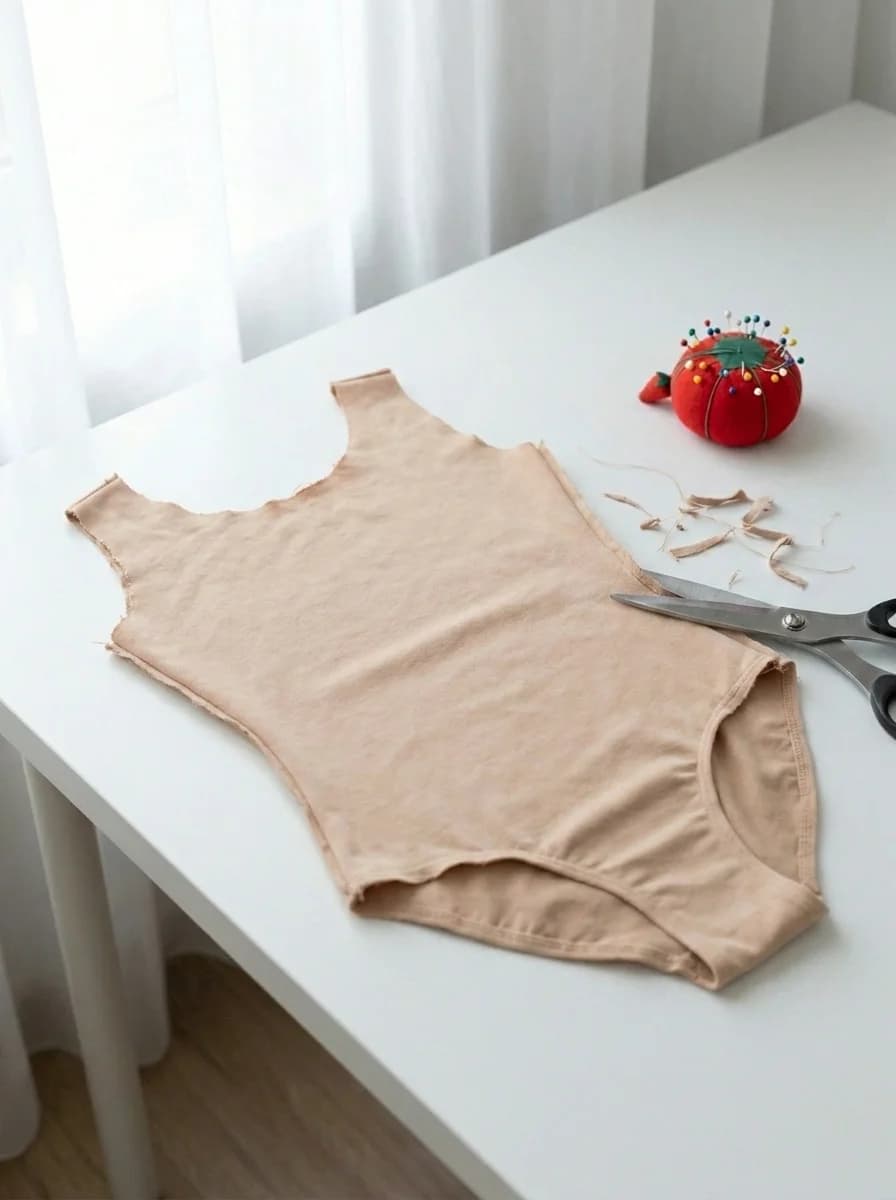
Fix what needs fixing
Small corrections after the first fitting are completely normal — that's part of learning, not a sign you got it wrong.
How digital patterns get you started faster
Digital patterns remove the hardest part of starting: drafting the base by hand. Instead of manual calculations and guesswork, you enter measurements and get a pattern built for that exact kid.
AROA builds sport-specific patterns from individual measurements. It gives you a fitted base without manual drafting, and lets you preview the result before you commit.
A digital pattern doesn't replace skill, taste, or sewing practice. What it does is remove the one step that stops most people before they've even started — building an accurate base when the fabric's picked, the idea's there, and drafting feels like the hardest part.
Ready to try your first pattern?
Build a custom leotard pattern from your own measurements in AROA, and preview the result before you order. It's a simple way to start your first piece from a fitted base — not from blank paper and guesswork.